

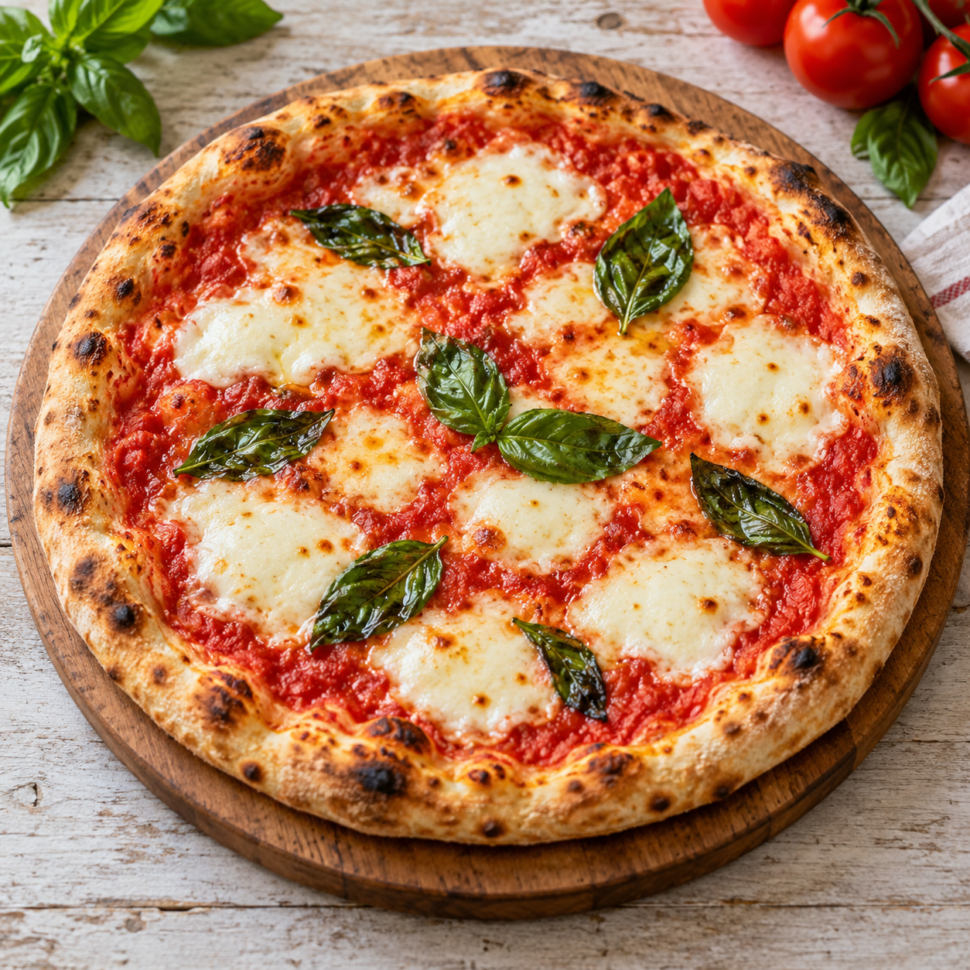
Make Margherita pizza with homemade dough, tomato, mozzarella and basil. Includes rising cues, shaping advice and tips for a crisp base in a home oven.
A Margherita pizza keeps the topping simple so the crust, tomato and mozzarella each have room to stand out. This home-oven version makes two thin pizzas from one small batch of dough. Draining the cheese and spreading the sauce lightly are as important as getting the oven hot: excess moisture can leave the centre soft even when the edges look browned.
Makes: 4 servings (2 pizzas, about 28 cm each). Estimated timing: About 30 minutes active preparation, 90 minutes rising and resting, and 12–15 minutes baking. Oven preheating overlaps the second rest. Allow extra time if baking the pizzas separately.
Recipe development note: this recipe has not been kitchen-tested by Tasty Food. Times are estimates; use the texture and doneness cues in the method. The featured image is an AI-generated serving illustration and may differ from your result.
Equipment
A mixing bowl, scales, measuring jug, clean cover, two sturdy metal baking trays rated for the chosen oven temperature, a spatula and oven gloves.
Ingredients
- 300 g strong white bread flour, plus a little for shaping
- 3 g instant dried yeast, about 1 teaspoon
- 6 g fine salt, about 1 teaspoon
- 195 ml lukewarm water, not hot
- 1 tablespoon olive oil for the dough, plus a little for the bowl
- 200 g tomato passata
- 1 small garlic clove, finely grated
- 1 teaspoon olive oil for the sauce, plus 1 teaspoon for finishing
- 1/4 teaspoon fine salt for the sauce, or to taste
- 200 g fresh mozzarella, drained, torn and patted dry
- A small handful of fresh basil leaves
Instructions
- Mix and knead the dough. Mix flour, yeast and the 6 g salt in a bowl. Add lukewarm water and 1 tablespoon oil, then stir until no dry flour remains. Knead on a lightly floured surface for 8–10 minutes until smoother and elastic. The dough should feel slightly tacky; add flour sparingly rather than making it dry and stiff. Do not taste uncooked dough.
- Let it rise, then divide. Put the dough in a lightly oiled bowl, cover and leave at comfortable room temperature until roughly doubled, about 60–90 minutes. Temperature and yeast condition affect the timing. Divide into two equal pieces, shape into balls, cover and rest for another 20–30 minutes. This second rest makes the dough easier to stretch.
- Prepare the oven and toppings. During the second rest, heat the oven to 240°C/220°C fan/465°F, or the highest setting your trays safely allow. Place shelves in the upper and lower thirds. Mix passata, garlic, 1 teaspoon oil and the sauce salt. Drain and pat the mozzarella dry; leave it on kitchen paper while shaping the bases. Keep some basil for finishing.
- Shape and top lightly. Lightly flour the trays and your hands. Stretch each dough ball into a roughly 28 cm round, keeping a slightly thicker rim. Set it on a tray. Divide the sauce between the bases, leaving a 1–2 cm border, then add the mozzarella in small pieces with gaps between them. Add a few basil leaves if desired, reserving the rest.
- Bake until the base is cooked. Bake for about 12–15 minutes, swapping the trays between shelves halfway through if cooking both together. Ovens vary, so check that the rim is golden and the underside is browned and firm, with no wet, doughy strip beneath the topping. Continue for a few minutes if needed. If only one tray fits comfortably, bake separately and keep the second topped pizza waiting only briefly.
- Finish and slice. Lift each pizza onto a board using a broad spatula and oven gloves as needed. Let it stand for 2 minutes, add the remaining basil and drizzle the final teaspoon of oil across both pizzas. Slice and serve. A fresh leafy salad makes a simple accompaniment.
Cooking notes and substitutions
If the dough springs back
Cover it and rest for another 10 minutes, then stretch gently again. Forcing a tight dough ball often tears the middle. If a small hole appears, pinch it closed before adding sauce.
Avoiding a soggy centre
Use the measured sauce and well-drained mozzarella. Fresh cheese can release a little liquid as it melts; large wet pieces or a thick layer of sauce make this harder to evaporate. Browned cheese alone does not tell you that the dough underneath has cooked.
Preparing ahead and storing leftovers
After kneading, cover the dough and refrigerate for up to 24 hours instead of the room-temperature first rise. Bring it back toward room temperature and let it become puffy before dividing and shaping; timing will be longer and variable. Refrigerate baked leftovers within 2 hours, or 1 hour above 32°C/90°F. Store at 4°C/40°F or below, use within 3–4 days and reheat to 74°C/165°F.
Allergens and food safety
Contains wheat and milk. Choose mozzarella labelled suitable for vegetarians if that matters to your household. Check yeast and packaged sauce labels for additional ingredients.
For chilling and reheating, see USDA leftovers guidance. For dough handling, see FDA flour safety guidance. Clean flour-covered surfaces and avoid tasting raw dough.
Browse the complete recipe index or try Cajun Chicken Alfredo Pizza. For a recipe correction, use our contact page with the recipe name, oven setting and any substitutions.