

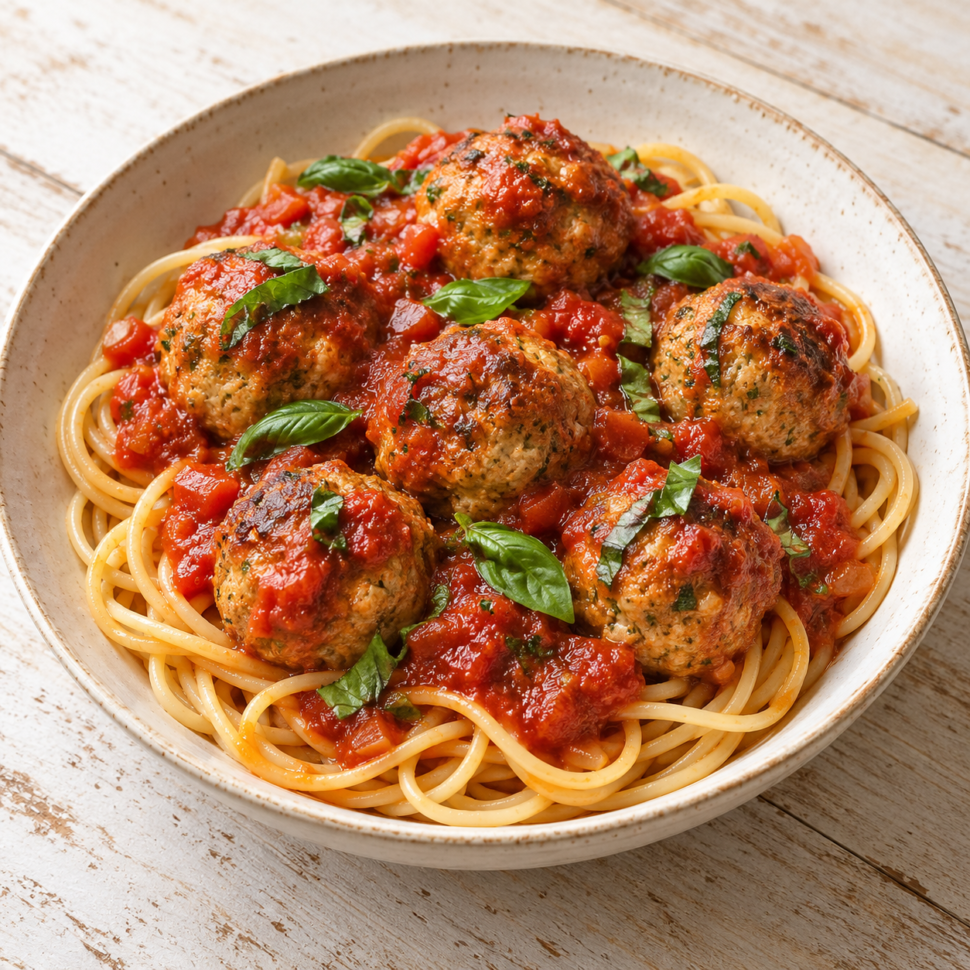
Tender turkey meatballs simmered in tomato sauce, with a simple breadcrumb mixture, thermometer checks and freezer guidance. Serve with pasta or bread.
A short rest for the breadcrumb mixture helps these turkey meatballs hold together without heavy mixing. They finish gently in tomato sauce after browning, which gives you a useful window to cook pasta or prepare a side. The sauce should bubble quietly rather than boil hard around the meatballs.
Serves: 4 | Estimated preparation: 25 minutes | Estimated cooking: 35 minutes | Estimated total: 60 minutes.
Recipe development note: this recipe has not been kitchen-tested by Tasty Food. Times are estimates; follow the texture and safe-temperature checks in the method. The featured image is an AI-generated serving illustration and may differ from your result.
Equipment
A mixing bowl, a wide lidded sauté pan, a spoon or small scoop, tongs and a food thermometer.
Ingredients
- 500 g ground turkey
- 40 g dry breadcrumbs
- 60 ml milk
- 1 medium egg
- 2 garlic cloves, finely grated, divided
- 1 teaspoon dried oregano, divided
- 3/4 teaspoon fine salt, divided, plus more to taste
- 1/4 teaspoon black pepper
- 2 tablespoons olive oil, divided
- 1 small onion, finely chopped
- 2 tablespoons tomato purée
- 800 g canned chopped tomatoes
- 120 ml water, plus more if needed
- A small handful of fresh basil, torn
- 300 g dried spaghetti, or bread to serve
Instructions
- Mix and rest the meatballs. Combine breadcrumbs and milk in a bowl and leave for 5 minutes. Add turkey, egg, half the garlic, half the oregano, 1/2 teaspoon salt and the pepper. Fold together just until evenly mixed. With lightly damp hands, form about 20 meatballs. Wash your hands and clean surfaces after handling the raw turkey.
- Brown without crowding. Heat 1 tablespoon oil in the wide pan over medium heat. Brown the meatballs in two batches for about 5 minutes per batch, turning gently. They do not need to be cooked through yet. Transfer to a plate reserved for partially cooked meat, keeping it away from ready-to-eat food.
- Build the tomato sauce. Add the remaining oil and onion to the pan. Cook for 5–6 minutes until softened, lowering the heat if needed. Add the remaining garlic and oregano and stir for 30 seconds. Stir in the tomato purée for 1 minute, then add chopped tomatoes, water and the remaining measured salt. Scrape up the browned bits.
- Finish the turkey safely. Return the meatballs and any plate juices to the sauce. Cover partly and simmer gently for 12–15 minutes, turning once. Check several meatballs at their centres with a thermometer; each should reach 74°C/165°F. If necessary, cook longer. Add a splash of water if the sauce catches before the centres are ready.
- Cook the pasta and serve. Meanwhile, cook spaghetti in boiling water according to its packet directions. Reserve a mug of cooking water before draining. Stir basil into the sauce, taste and adjust seasoning. Serve the meatballs over the pasta, loosening the sauce with a little pasta water if needed.
Cooking notes and substitutions
Keeping the texture tender
Very lean turkey can become firm when packed tightly or overworked. Mix with a folding motion and shape only firmly enough to hold together. If the mixture feels sticky, chill it for 10 minutes; adding a large amount of extra breadcrumbs can make it dense.
If the sauce tastes sharp
Give the tomatoes a few extra minutes at a quiet simmer before adding the meatballs. A tablespoon of water can soften an overly concentrated sauce. Tomatoes vary, so taste near the end rather than adding sugar automatically.
Storage and reheating
Cool in shallow containers and refrigerate within 2 hours, or 1 hour above 32°C/90°F. Keep the meatballs in their sauce for 3–4 days. Freeze portions for up to 2 months for best texture, thaw in the refrigerator and reheat to 74°C/165°F. Cook fresh pasta for a firmer result.
Allergens and food safety
Contains egg, milk and wheat as written. Use suitable labelled alternatives if needed and check the breadcrumbs carefully. Keep refrigerated food at 4°C/40°F or below. Use clean utensils when checking cooked food.
Food safety reference: FoodSafety.gov cooking temperature chart. For chilling and reheating guidance, see USDA leftovers guidance.
Find another meal in the complete recipe index. If a quantity or step needs clarification, use the contact page and include the recipe name, substitutions and what happened.