

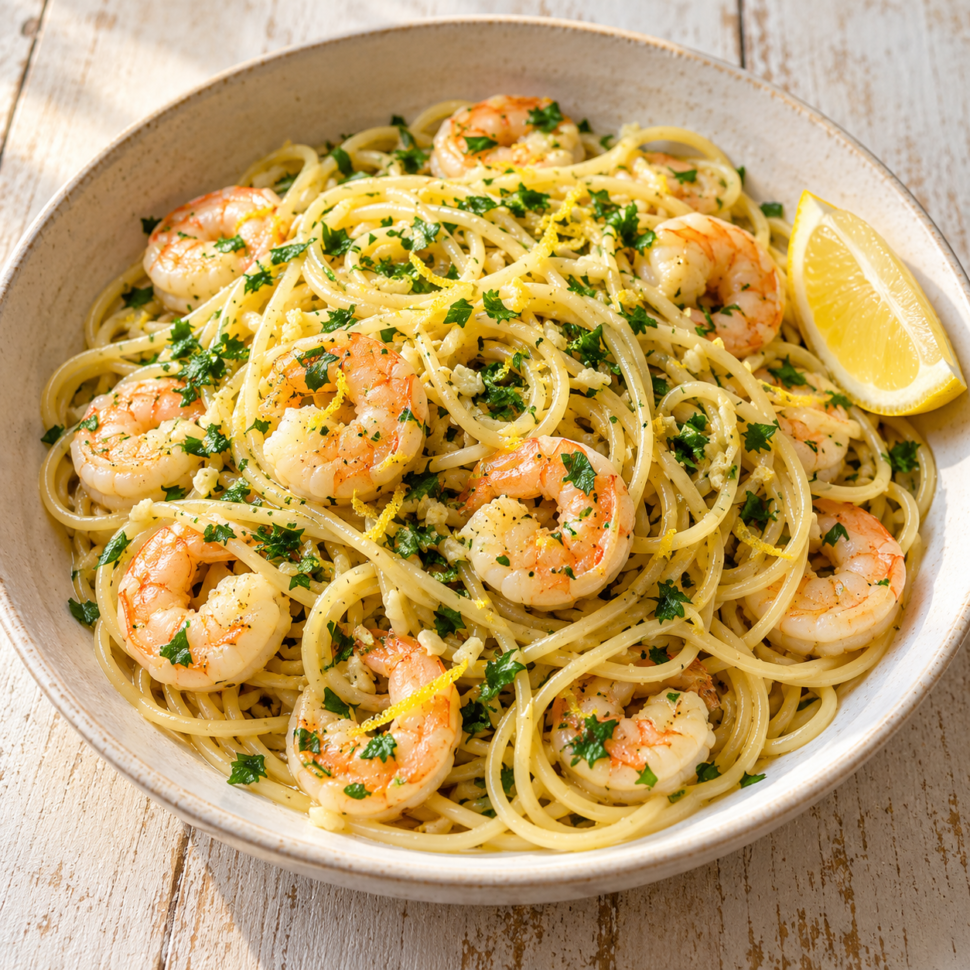
Lemon-garlic shrimp spaghetti with olive oil, parsley and a light pasta-water sauce. Includes thawing advice, doneness cues and help for a dry sauce.
This spaghetti has a light, glossy sauce made from olive oil, lemon and a little starchy pasta water. The shrimp cook separately and return to the pan only at the end. That sequence helps you finish the pasta properly without leaving the seafood over the heat for the whole tossing stage.
Serves: 4 | Estimated preparation: 15 minutes | Estimated cooking: 20 minutes | Estimated total: 35 minutes.
Recipe development note: this recipe has not been kitchen-tested by Tasty Food. Times are estimates; follow the texture and safe-temperature checks in the method. The featured image is an AI-generated serving illustration and may differ from your result.
Equipment
A large saucepan, a large frying pan, tongs, a fine grater and a thermometer suitable for small pieces of food.
Ingredients
- 320 g dried spaghetti
- 500 g raw peeled and deveined shrimp, thawed if frozen
- 3 tablespoons olive oil, divided
- 4 garlic cloves, thinly sliced
- 1/4 teaspoon chilli flakes, optional
- 1 unwaxed lemon, finely grated zest and 2 tablespoons juice
- 150–250 ml reserved pasta cooking water, as needed
- 3 tablespoons chopped parsley
- 1/4 teaspoon fine salt for shrimp, plus salt for pasta water
- 1/4 teaspoon black pepper
Instructions
- Prepare the shrimp. If using frozen shrimp, thaw them in a covered container in the refrigerator and drain well. Pat dry with kitchen paper. Toss with the measured salt and pepper. Prepare the garlic, zest and parsley before turning on the frying pan, since the final cooking moves quickly.
- Start the spaghetti. Bring a large pan of water to the boil and season it. Add spaghetti and cook according to the packet, aiming to transfer it to the sauce about 1 minute before fully done. Before draining, reserve at least 300 ml of the cooking water in a heatproof jug.
- Cook the shrimp briefly. Heat 1 tablespoon oil in the frying pan over medium-high heat. Add shrimp in one layer, using two batches if necessary. Cook for about 1–2 minutes on each side, depending on size, until pearly and opaque. Check the thickest shrimp for 63°C/145°F with a suitable thermometer. Transfer cooked shrimp to a clean plate.
- Make the garlic base. Reduce the heat to medium-low. Add the remaining oil, garlic and chilli flakes if using. Stir for 45–60 seconds, just until fragrant and lightly coloured; garlic burns quickly in the hot pan. Add 150 ml pasta water carefully, then the lemon zest and juice.
- Toss into a glossy sauce. Add the nearly cooked spaghetti and toss over medium heat for 1–2 minutes until the pasta is tender and the liquid clings to it. Add more cooking water in small splashes if it looks dry. Return the cooked shrimp for the final 30 seconds, remove from the heat and fold in parsley. Taste and serve at once.
Cooking notes and substitutions
Why the sauce looks oily or dry
Pasta water supplies starch that helps bring the oil and liquid together. Add it gradually and toss vigorously with tongs. Plain hot water can loosen the dish, but usually gives a thinner coating. Do not keep simmering shrimp while trying to correct the pasta.
Lemon and garlic adjustments
Lemons differ in acidity. Start with the listed juice and add extra only after tasting. If the garlic becomes dark brown, discard the burnt garlic and oil and begin that stage again; lemon will not remove its bitterness.
Leftovers
This dish has its best texture immediately after cooking. Refrigerate leftovers within 2 hours, or 1 hour above 32°C/90°F, and use within 3 days. Reheat to 74°C/165°F with a splash of water; the shrimp may become firmer. Avoid repeated reheating.
Allergens and food safety
Contains shellfish and wheat. Check pasta ingredients for egg if relevant. Keep raw seafood separate from ready-to-eat ingredients. Keep refrigerated food at 4°C/40°F or below. Use clean utensils when checking cooked food.
Food safety reference: USDA safe cooking temperatures. For chilling and reheating guidance, see USDA leftovers guidance.
Find another meal in the complete recipe index. If a quantity or step needs clarification, use the contact page and include the recipe name, substitutions and what happened.