

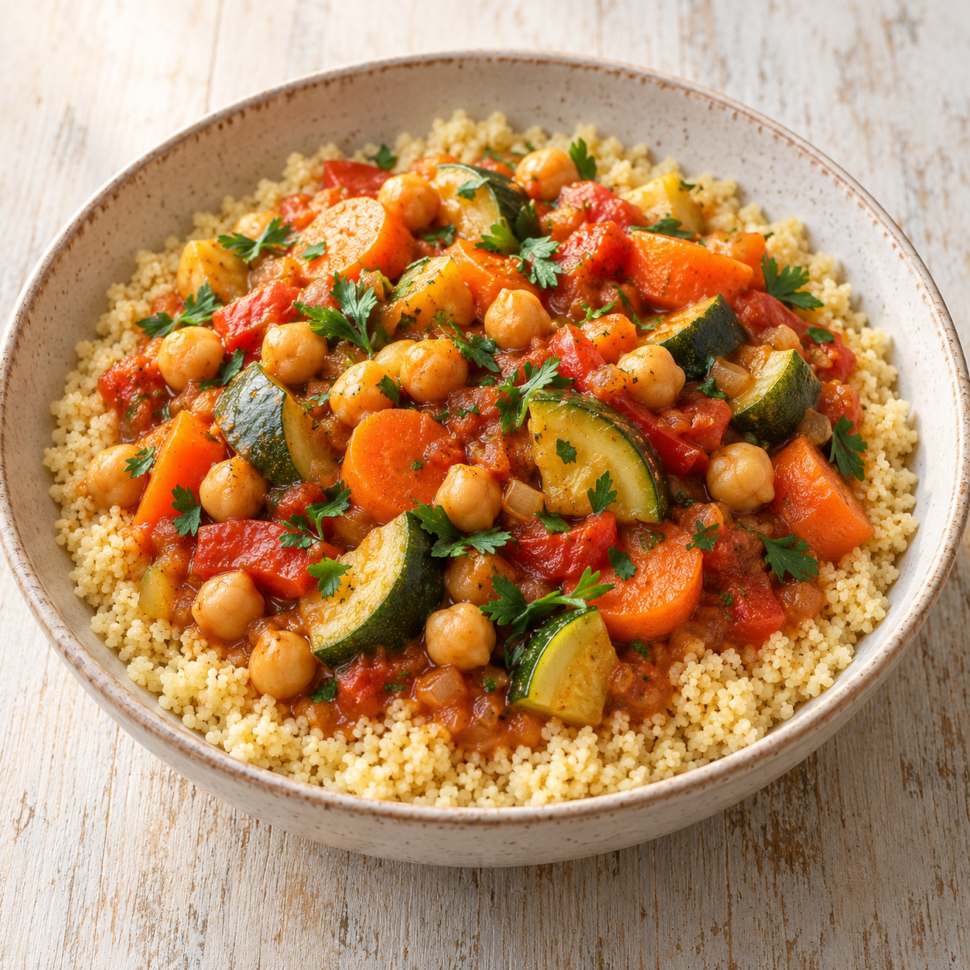
Couscous bowls topped with chickpeas, carrots, courgettes and gently spiced tomato broth. Includes vegetable timing, couscous ratios and storage notes.
This is a practical vegetable couscous bowl inspired by the combination of warm spices, broth and tender vegetables. It uses quick-cooking couscous for convenience. Carrots go into the pan before courgettes, so the firmer vegetables have time to soften without turning everything else to mush.
Serves: 4 | Estimated preparation: 20 minutes | Estimated cooking: 30 minutes | Estimated total: 50 minutes.
Recipe development note: this recipe has not been kitchen-tested by Tasty Food. Times are estimates; follow the texture and safe-temperature checks in the method. The featured image is an AI-generated serving illustration and may differ from your result.
Equipment
A wide lidded saucepan, a heatproof bowl with a plate or lid, a fork and a measuring jug.
Ingredients
- 1 tablespoon olive oil, plus 1 tablespoon for couscous
- 1 onion, chopped
- 3 medium carrots, peeled and cut into 1 cm half-moons
- 1 red pepper, deseeded and cut into chunks
- 2 garlic cloves, chopped
- 2 teaspoons ground cumin
- 1 teaspoon ground coriander
- 1/2 teaspoon ground ginger
- 1/4 teaspoon ground cinnamon
- 400 g canned chopped tomatoes
- 600 ml vegetable stock
- 2 medium courgettes, cut into 2 cm chunks
- 1 × 400 g can chickpeas, drained and rinsed, about 240 g drained
- 280 g quick-cooking couscous
- Freshly boiled water or stock for couscous, according to packet ratio
- 1/2 teaspoon fine salt, plus more to taste
- 1 lemon, cut into wedges
- 3 tablespoons chopped parsley
Instructions
- Soften the base vegetables. Warm 1 tablespoon oil in the saucepan over medium heat. Add onion, carrots and pepper and cook for 7–8 minutes, stirring regularly. The onion should soften, but the carrots do not need to be tender yet. Add a spoonful of water if the base starts to stick.
- Bloom the spices. Stir in garlic, cumin, coriander, ginger and cinnamon for about 30 seconds. Add tomatoes and the 600 ml stock, scraping the base. Bring to a gentle simmer, cover partly and cook for 12–15 minutes, until the carrots are almost tender when pierced.
- Finish the stew. Add courgettes, chickpeas and the measured salt. Simmer, partly covered, for another 10–12 minutes until the courgettes are tender but keep their shape. If the sauce reduces too far, add a small splash of water. Taste before adding more salt, especially when using a strongly salted stock.
- Hydrate the couscous. While the stew finishes, put couscous and the remaining tablespoon oil in the heatproof bowl. Add freshly boiled water or stock in the quantity stated on its packet. Cover and stand for the packet time, generally 5–10 minutes. Fluff thoroughly with a fork, separating clumps from the base.
- Assemble with broth. Divide couscous among four bowls. Spoon vegetables and chickpeas over it with some of the tomato broth. Add parsley and serve lemon wedges alongside. Keep extra broth available so each person can moisten the couscous to their preference.
Cooking notes and substitutions
Choosing couscous
The small, quick-cooking wheat couscous intended for soaking is needed here. Pearl couscous is a different shape and must be cooked like pasta or according to its own packet instructions. Liquid ratios vary between brands, so use the package rather than assuming equal volumes.
Changing the vegetables
Turnip or pumpkin can replace part of the carrots, with the size adjusted to their cooking speed. Add delicate vegetables later. For heat, serve a little harissa separately; brands vary in both chilli strength and allergens, so start with a small amount.
Keeping leftovers useful
Store the couscous separately from the vegetable stew where possible. Refrigerate promptly within 2 hours, or within 1 hour above 32°C/90°F, and use within 3 days. Reheat to 74°C/165°F; add a spoonful of water to couscous and stir to distribute the heat.
Allergens and food safety
Contains wheat. Check vegetable stock and any harissa served alongside for celery and other allergens. Keep refrigerated food at 4°C/40°F or below. Use clean utensils when checking cooked food.
Food safety reference: USDA safe cooking temperatures. For chilling and reheating guidance, see USDA leftovers guidance.
Find another meal in the complete recipe index. If a quantity or step needs clarification, use the contact page and include the recipe name, substitutions and what happened.