

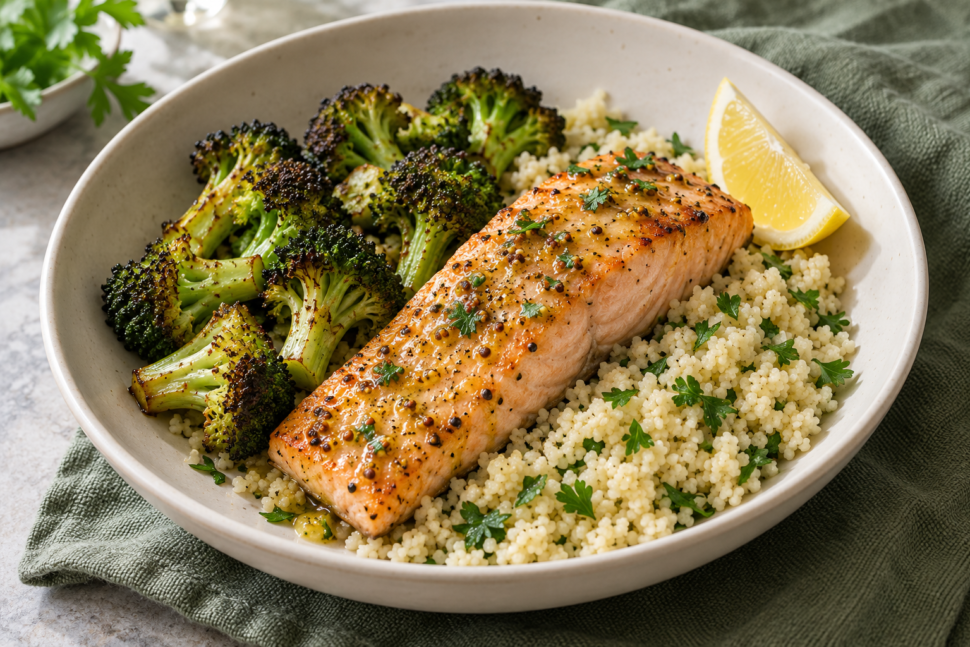
Bake salmon with a lemon-Dijon coating and roasted broccoli, then serve with fluffy couscous. Includes timing, temperature checks and substitutions.
This salmon dinner pairs a light lemon-and-Dijon coating with browned broccoli and fluffy couscous. The broccoli starts first because it takes longer than the fish. While the oven does the roasting, the couscous steams in a covered bowl, making it easier to bring all three parts to the table together.
Serves: 4 servings. Estimated prep: 15 minutes. Estimated cooking: 25 minutes. Timings are estimates; use the texture and temperature checks below.
Equipment: A large rimmed baking tray, small bowl, heatproof bowl with a lid or plate, fork and instant-read food thermometer.
Ingredients
- 4 salmon fillets, about 150 g each, thawed if frozen and checked for pin bones
- 500 g broccoli, cut into similar-sized florets
- 2 tablespoons olive oil, divided
- 1 tablespoon Dijon mustard
- 1 lemon: 1 teaspoon finely grated zest, 2 tablespoons juice and wedges to serve
- 1 garlic clove, finely grated
- 250 g plain quick-cooking couscous, not pearl couscous
- Boiling low-sodium vegetable stock, quantity according to the couscous packet
- 1/2 teaspoon fine salt, divided, then adjust to taste
- 1/4 teaspoon ground black pepper
- 2 tablespoons chopped parsley
Instructions
- Start the broccoli. Heat the oven to 220°C/425°F (200°C fan). Toss the broccoli with 1 tablespoon olive oil and half the salt on a large baking tray. Spread it out and roast for 10 minutes.
- Mix the coating. Stir together the Dijon mustard, remaining tablespoon oil, lemon zest, 1 tablespoon lemon juice, garlic, remaining salt and pepper. Pat the salmon dry with kitchen paper and place it on a clean plate.
- Add the salmon. Turn the broccoli and make four spaces on the tray. Place the salmon skin-side down, if it has skin, and spread the mustard mixture over the top. Use a second tray if necessary to avoid crowding.
- Roast until cooked. Roast for about 10–15 minutes more, depending on fillet thickness. Check the centre of each fillet with a thermometer: fish should reach 63°C/145°F. The broccoli should be tender with browned edges. Remove individual pieces as they finish rather than waiting for the thickest fillet.
- Steam the couscous. While the fish roasts, put the couscous in a heatproof bowl. Add the amount of boiling stock specified on its packet, cover and leave for the stated time, usually about 5 minutes. Fluff thoroughly with a fork, then fold in the parsley and remaining tablespoon lemon juice.
- Assemble. Divide the couscous between four bowls. Add the broccoli and a salmon fillet to each, with lemon wedges alongside. Taste before adding extra salt because Dijon and stock can both be salty.
Use the right couscous
This method is for quick-cooking couscous. Pearl couscous needs simmering and cannot simply be covered with boiling stock. Packet liquid ratios differ, so use the directions for the brand you have. For a wheat-free alternative, serve the fish with separately cooked rice or quinoa.
Keep the cooking even
Choose fillets of similar thickness when possible. If a fillet has a very thin tail, tuck the end underneath so it is less likely to dry out. Cut broccoli into matching florets; very small pieces can burn before large stems soften. Slice thick stems into smaller pieces.
Substitutions
Green beans can replace broccoli, but check them earlier. If you cannot use mustard, coat the fish with olive oil, lemon and garlic instead. Avoid swapping in a sweet glaze at the same temperature without watching closely, as added sugars can scorch.
Storage and reheating
Refrigerate portions in shallow covered containers within 2 hours, or 1 hour above 32°C/90°F. Keep at 4°C/40°F or colder and use within 3–4 days. Reheat leftovers to 74°C/165°F; cover the salmon and couscous with a small splash of water to limit drying.
Allergen notes
Contains fish, wheat and mustard. Stock may contain celery or other allergens; check labels.
Food-safety reference: USDA safe cooking, cooling and leftover guidance.
More meal ideas
Browse the complete recipe index for more dinner ideas, salads and desserts.
This recipe has not been kitchen-tested by Tasty Food. Cooking times are estimates. The featured image is an AI-generated serving illustration and may differ from your result.