

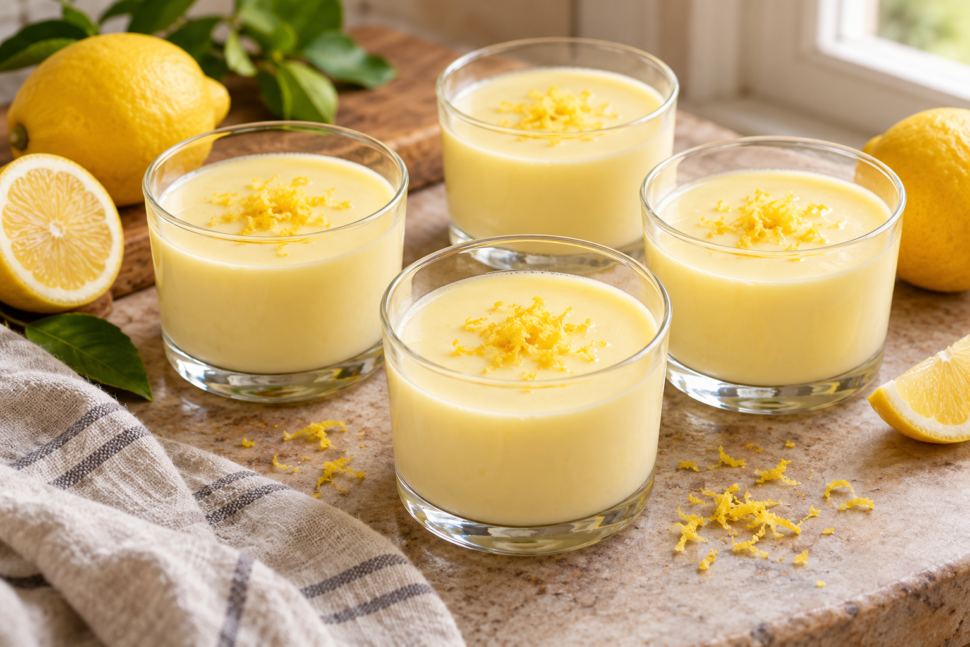
Lemon posset made with double cream, sugar and measured lemon juice. Includes chilling time, cream-fat guidance and troubleshooting for a soft set.
Lemon posset is a small, rich cream dessert that sets in the refrigerator after lemon juice is added. There are no eggs or gelatin in this version. The important choices are high-fat cream, measured juice and enough chilling time. Lemon size varies, so measure the juice rather than relying on a fixed number of fruit. Serve modest portions on their own, or add a plain biscuit at the table if you want a crisp contrast.
Makes: 4 small servings. Estimated timing: 10 minutes preparation, about 10 minutes heating, 20 minutes initial cooling and at least 4 hours chilling; allow roughly 4 hours 40 minutes overall.
Jump to ingredients · Jump to instructions
Recipe development note: this recipe has not been kitchen-tested by Tasty Food. Times are estimates; follow the texture and doneness cues. The featured image is an AI-generated serving illustration and may differ from your result.
Equipment
Medium saucepan, whisk or spoon, measuring jug, fine strainer, zester, four small heatproof glasses or ramekins and a tray.
TASTY FOOD / RECIPE CARD
Lemon Posset in Individual Dessert Glasses
Times are estimates. Follow the method’s doneness cues. Tick ingredients as you prepare.
Makes: 4 small servings. Estimated timing: 10 minutes preparation, about 10 minutes heating, 20 minutes initial cooling and at least 4 hours chilling; allow roughly 4 hours 40 minutes overall.
Recipe development note: this recipe has not been kitchen-tested by Tasty Food. Times are estimates; follow the texture and doneness cues. The featured image is an AI-generated serving illustration and may differ from your result.
Equipment
Medium saucepan, whisk or spoon, measuring jug, fine strainer, zester, four small heatproof glasses or ramekins and a tray.
Ingredients
- 300 ml pasteurised double cream, around 48% fat
- 85 g caster or fine granulated sugar
- 40 ml freshly squeezed lemon juice, strained
- Finely grated zest of 1 washed lemon, divided
Instructions
- Set up the servings. Choose four small heatproof dessert glasses or ramekins, each holding at least 100 ml. Set them on a tray that fits in the refrigerator. Wash and dry the lemon before zesting, taking only the yellow peel. Squeeze and strain the juice, then measure 40 ml exactly.
- Dissolve the sugar. Put cream and sugar in a medium saucepan with plenty of space above the liquid. Heat gently, stirring until the sugar dissolves. Scrape around the base so no sugar sits in a hot patch. Do not leave the pan unattended: cream can rise rapidly once it starts to boil.
- Boil briefly. Bring to a controlled boil, lower the heat enough to prevent it climbing out of the pan, and maintain a gentle boil for 3 minutes, stirring frequently. Start timing when the mixture actually boils. Lift the pan off the heat briefly if it threatens to overflow; avoid reducing it into a thick caramel-like syrup.
- Add the lemon. Remove from the heat. Stir in the measured lemon juice and about half the zest until evenly mixed. Leave for about 10 minutes, stirring once or twice. The cream may still look quite fluid at this stage; the final set develops during refrigeration rather than through continued boiling.
- Portion and chill. Pour evenly into the heatproof glasses, leaving room at the top. Let stand another 10 minutes, then refrigerate promptly. Keep the total time out of the refrigerator short and within 2 hours. Once cool, cover the glasses and chill for at least 4 hours, preferably overnight, until softly set.
- Finish cold. Check that the surface holds a gentle spoon indentation before serving. Add the reserved zest just before eating. Keep the remaining servings refrigerated while serving the first. If adding biscuits, berries or another garnish, add those only at the table so the surface stays neat.
Tips and troubleshooting
Thin cream or a large unmeasured splash of juice can produce a loose or split dessert. Do not substitute milk, single cream or plant cream and expect the same set. If still loose after overnight chilling, serve it as a cold lemon cream rather than repeatedly reheating it. For the next batch, check the cream fat level, juice measurement and full boiling time. Small heatproof glasses are easier to portion than one large bowl.
Substitutions and serving ideas
Omit the zest for a smoother texture, or strain the warm lemon cream before pouring. Lime juice gives a different flavour and may set differently; treat it as a separate experiment. For an extra serving contrast, offer a small plain biscuit alongside, checking its allergen label. The recipe is deliberately not presented as a dairy-free dessert.
Allergen notes
Contains milk. Optional biscuits can add wheat, egg, nuts or other allergens. Use pasteurised cream and clean utensils, and follow the cream’s use-by date.
Storage
Keep covered in the refrigerator at 4°C/40°F or colder and use within 2 days or the cream’s use-by date, whichever comes first. This is a chilled dessert, not a shelf-stable preserve: lemon juice does not make it safe to store at room temperature. Freezing can change the texture and is not recommended.
Original recipe and updates: https://tastyfood.fun/2026/10/28/lemon-posset/
More dessert ideas
Next, try Apple and Oat Crumble with a Golden Topping, or browse the complete recipe index. For questions or recipe corrections, visit our contact page.